
Concussion diagnosis has traditionally depended on a combination of the injury history, symptoms, neurological examination, cognitive testing, and imaging when doctors believe a scan is needed. That approach remains important, but blood-based biomarkers are giving clinicians another source of objective information after a suspected mild traumatic brain injury.
Interest in a blood test for concussion has grown because proteins released after brain-cell injury can sometimes be measured in the bloodstream. Two of the best-known biomarkers are glial fibrillary acidic protein, or GFAP, and ubiquitin C-terminal hydrolase L1, usually shortened to UCH-L1. FDA-cleared tests using these biomarkers are already intended to help healthcare professionals evaluate certain adults with suspected mild traumatic brain injury and decide whether a head CT may be necessary.
That does not mean a simple blood draw can diagnose every concussion or replace a full medical evaluation. The role of these tests is more specific. New research published in 2026 is helping clarify where biomarkers may be most useful, including in older adults whose symptoms can be difficult to distinguish from other health problems.
If you are new to the subject, our Start Here guide to brain injury provides a broader introduction to symptoms, diagnosis, recovery, and the questions that often follow a head injury.
How Concussion Blood Tests Work
A traumatic brain injury can damage or stress different types of cells in the brain. When that happens, certain proteins may enter the bloodstream. A laboratory or point-of-care test can measure the concentration of selected proteins and use the results, together with other clinical information, to help clinicians assess the likelihood of an acute injury that may be visible on CT imaging.
In March 2024, the U.S. Food and Drug Administration cleared the Abbott i-STAT TBI cartridge for use with the i-STAT Alinity system. The test measures GFAP and UCH-L1 in venous whole blood. According to the FDA, it is intended for adults age 18 or older who present within 24 hours of a suspected mild TBI and is used to assist in determining whether a head CT is needed. The FDA specifically describes the result as something that must be considered together with other clinical information, not as a stand-alone diagnosis.
GFAP and UCH-L1 Explained
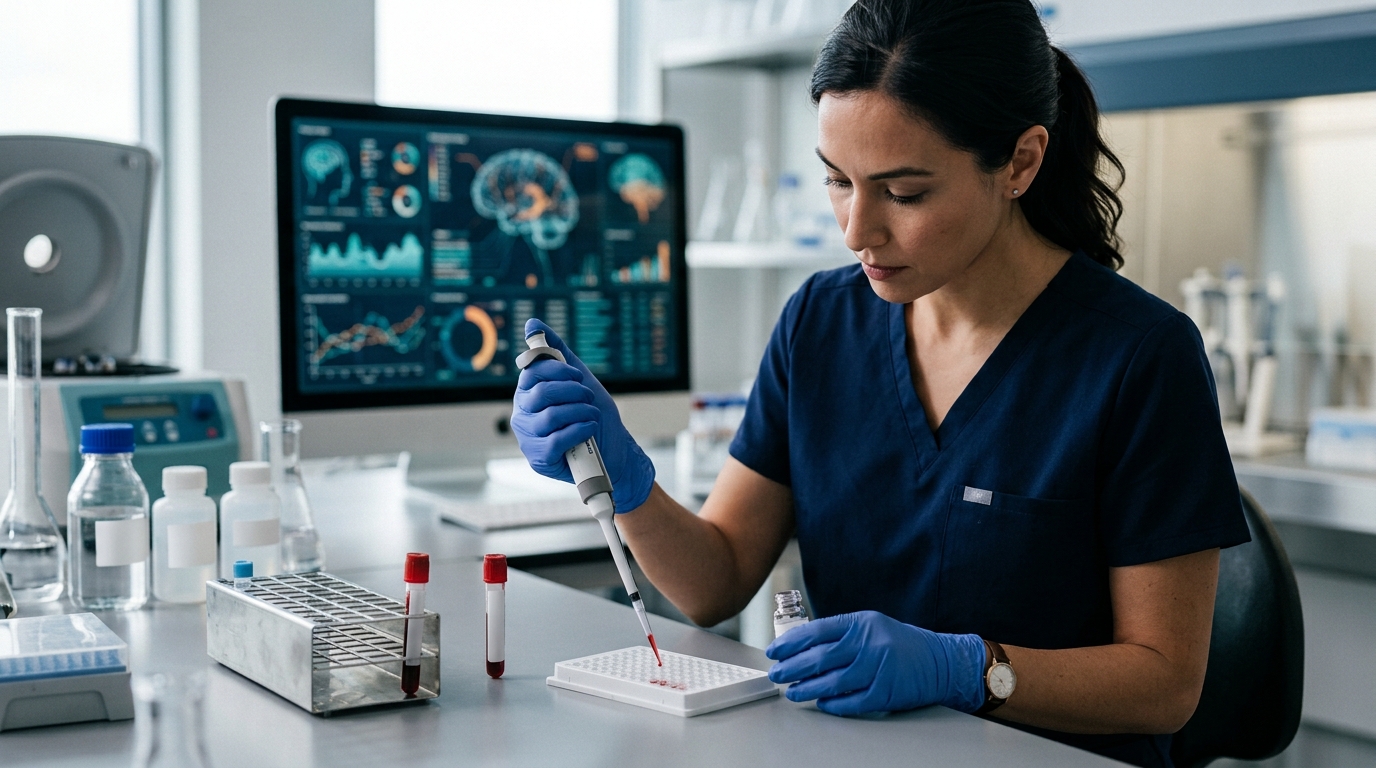
GFAP is a structural protein associated mainly with astrocytes, cells that help support and maintain the brain’s environment. When brain tissue is injured, GFAP concentrations in blood can rise. UCH-L1 is found primarily in neurons and is another protein researchers have studied as a marker of neuronal injury.
Why biomarkers can help after mild TBI
Mild TBI can be challenging because the word “mild” describes the initial clinical classification, not necessarily how insignificant the experience will feel to the person who was injured. Someone may have headache, dizziness, nausea, light sensitivity, concentration problems, memory difficulties, sleep changes, mood symptoms, or fatigue even when conventional imaging does not show an acute structural injury.
Blood biomarkers are most useful when the clinical question is focused. In an emergency setting, they may help identify patients who are unlikely to have an acute intracranial lesion on CT and support more selective imaging in appropriate cases.
What an FDA-cleared test actually tells clinicians
The distinction between “concussion test” and “CT triage aid” matters. The FDA-cleared i-STAT TBI test is not marketed as proof that a person does or does not have every form of concussion. Its authorized role is to assist clinicians evaluating certain adults with suspected mild TBI in determining the need for a head CT.
A “not elevated” biomarker interpretation is associated with the absence of acute traumatic intracranial lesions visible on CT. That is clinically useful, but it does not mean the person has no symptoms, no functional impairment, or no need for follow-up. Concussion remains a clinical diagnosis that can involve symptoms and changes not captured by routine structural imaging.
Readers who want the regulatory details can review the FDA’s information about the point-of-care TBI blood test.
Why 2026 Research Is Getting Attention
One reason concussion biomarkers remain a fast-moving area is that researchers are studying how well they perform in populations that have historically been less represented in validation studies. Older adults are especially important. Falls are a major cause of mild TBI in later life, and symptoms such as confusion, slowed thinking, balance problems, headache, and fatigue may overlap with preexisting neurological conditions, medication effects, or age-related changes.
A 2026 cross-sectional study published in JAMA Network Open evaluated four plasma biomarkers in 89 adults age 60 and older: GFAP, UCH-L1, brain-derived tau, and neurofilament light. The researchers compared healthy controls, people with diagnosed mild TBI, and a smaller group with suspected mild TBI. GFAP showed the strongest diagnostic performance for distinguishing participants with mild TBI from healthy controls after accounting for age and sex.
New data in older adults
The older-adult findings are encouraging because diagnosis after a fall can be unusually complicated. A person may not remember the impact clearly. A fall may be unwitnessed. Baseline memory problems can make symptom reporting difficult. Anticoagulant or antiplatelet medications can also affect how clinicians think about injury risk and imaging.
However, the 2026 study does not mean GFAP has become a universal diagnostic answer. It was a relatively small study, and the authors emphasized the need for further validation. Biomarkers also have different release patterns, and concentrations can be influenced by factors such as age, timing of the blood draw, and other health conditions. A promising result in a study must still be translated carefully into real-world clinical practice.
We will continue covering developments like these in our Brain Injury Research & News section, where new studies can be placed in context rather than treated as instant changes to medical practice.
What Patients and Families Should Know
For patients, the biggest takeaway is that brain-injury evaluation is becoming more precise, but no single test tells the whole story. A healthcare professional may consider the mechanism of injury, loss of consciousness or memory, neurological signs, worsening symptoms, age, medications, medical history, cognitive changes, and other factors before deciding whether blood testing, CT imaging, observation, or follow-up is appropriate.
A normal CT scan and a low-risk biomarker result answer particular clinical questions. They do not automatically explain every headache, balance problem, memory complaint, sleep disturbance, or emotional change after a concussion. Persistent symptoms may still need follow-up.
Blood Tests Are One Piece of the Evaluation

A concussion can affect people differently, and recovery does not follow one universal timetable. Some people improve relatively quickly, while others need additional evaluation and targeted rehabilitation for vestibular problems, headaches, vision symptoms, cognitive difficulties, sleep disruption, mood changes, or challenges returning to work and everyday activities.
This is why blood biomarkers are best understood as part of a broader toolkit. They may make emergency evaluation more objective and may help doctors use CT scans more selectively, but they do not replace a neurological examination, careful symptom assessment, or individualized follow-up.
When symptoms still matter
After a head injury, urgent medical assessment is important when symptoms suggest a potentially serious problem. Worsening headache, repeated vomiting, seizures, increasing confusion, unusual behavior, weakness or numbness, slurred speech, inability to wake normally, or loss of consciousness can require emergency attention. People taking blood-thinning medication, older adults after significant falls, and anyone with rapidly worsening symptoms may require especially careful evaluation.
For people already diagnosed with a concussion, tracking changes over time can be useful. Note whether headaches, sleep, concentration, balance, mood, or memory are improving or affecting everyday life. This can help healthcare professionals adjust recommendations and decide whether specialist care is appropriate.
Our Living With Brain Injury section focuses on the longer-term practical issues that may continue after the emergency phase, while Trusted Resources connects readers with established organizations and government health information.
The progress in concussion blood testing is significant because it moves brain-injury assessment toward more objective biological information. In 2026, the most important development is not that blood tests have replaced traditional evaluation—they have not. It is that researchers and clinicians now have additional tools that may improve triage, reduce uncertainty in selected cases, and help identify where more testing is needed.
As research expands across different ages and injury patterns, GFAP, UCH-L1, and other biomarkers may become even more useful. For now, the safest interpretation is also the most accurate: a blood test can add valuable information, but good concussion care still depends on combining that information with symptoms, examination findings, clinical judgment, and follow-up.
Medical note: This article is for educational purposes and is not a substitute for diagnosis or treatment by a qualified healthcare professional. Seek urgent medical attention after a head injury if severe or worsening symptoms develop.