
For decades, traumatic brain injury has often been described with three familiar labels: mild, moderate, or severe. These terms are useful shorthand, especially in emergency care, but they can also create the impression that every person inside one category has the same type of injury, the same risks, or the same recovery path.
Two people may both receive a “mild TBI” classification and still have very different symptoms, scan findings, biomarker levels, medical histories, and recovery paths. One may recover quickly while another has headaches, dizziness, memory problems, fatigue, or difficulty returning to work.
In 2025, researchers involved in the NIH–National Institute of Neurological Disorders and Stroke Traumatic Brain Injury Classification and Nomenclature Initiative published a proposed new way to characterize acute TBI. Instead of relying primarily on one severity label, the framework combines four dimensions: clinical findings, biomarkers, imaging, and modifiers. The shorthand is CBI-M.
The goal is not to erase terms such as mild, moderate, and severe overnight. It is to describe brain injuries with more detail so clinicians and researchers can better understand what actually happened to an individual patient.
For readers who are just beginning to learn about head injury, our Start Here guide to brain injury explains the basics of traumatic brain injury, symptoms, evaluation, and recovery.
Why TBI Classification Is Changing
The traditional severity system is closely tied to the Glasgow Coma Scale, or GCS. The GCS evaluates eye opening, verbal response, and motor response. The total score ranges from 3 to 15. In common clinical use, scores of 13 to 15 are often grouped as mild TBI, 9 to 12 as moderate TBI, and 3 to 8 as severe TBI.
The GCS remains important because it standardizes the description of consciousness soon after injury. But one total score cannot capture every biological and clinical feature of TBI.
The Limits of “Mild, Moderate, Severe”
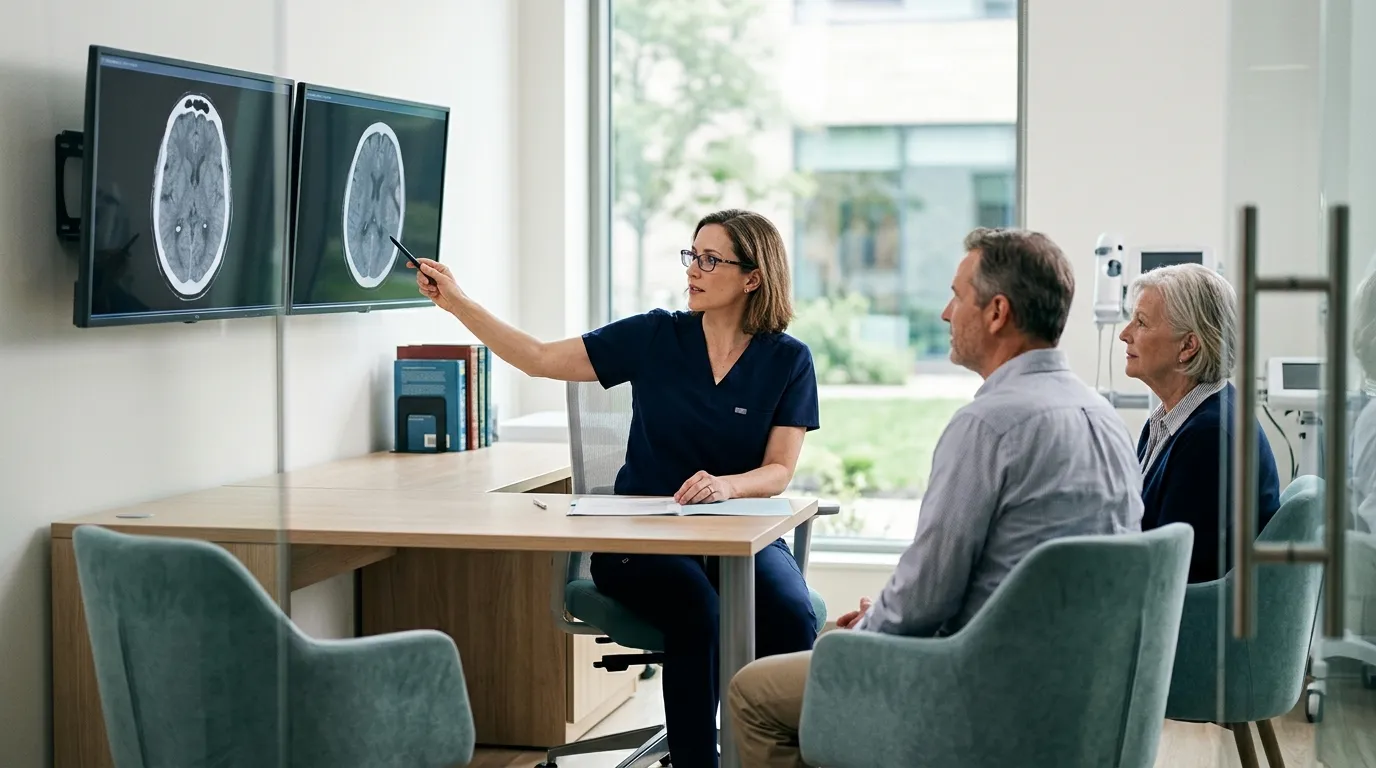
The word “mild” can be especially misleading to patients and families. It refers to the initial classification of injury severity, not necessarily to how easy the recovery will be.
Someone classified with mild TBI may have a normal CT scan but significant symptoms. Another person with the same initial GCS score may have an intracranial abnormality on imaging. A third may have health conditions, medications, age-related risks, or previous brain injuries that meaningfully change the clinical picture.
That variability is one reason experts have argued for a more multidimensional system.
Why the Glasgow Coma Scale is useful but incomplete
The GCS was never designed to describe every aspect of brain injury. A total score gives valuable information about consciousness and responsiveness, but it does not directly tell clinicians what type of structural damage is present, whether blood-based biomarkers are elevated, or which personal factors may influence recovery.
A score can also be affected by sedation, intoxication, intubation, facial injuries, language barriers, and other circumstances. Looking only at the total number can hide meaningful differences.
Why two patients with the same score can be different
Imagine two adults who arrive in an emergency department after separate falls. Both have a GCS score of 15. Under a simple severity model, both might fall into the same mild TBI category.
Yet one patient may have no acute abnormality on CT and rapidly improving symptoms. The other may have a small intracranial hemorrhage, elevated brain-injury biomarkers, take anticoagulant medication, and have a history of previous TBI. Calling both injuries “mild” does not communicate those differences very well.
A richer classification can preserve the useful clinical information while adding the details that may matter for treatment, monitoring, prognosis, and research.
What the CBI-M Framework Adds
The proposed CBI-M framework organizes acute traumatic brain injury around four pillars: Clinical, Biomarker, Imaging, and Modifier information. It was developed through an international NIH–NINDS initiative involving experts, implementation scientists, people with lived experience, and federal partners.
Instead of forcing a complex injury into one severity box, the framework encourages a profile of the injury.
Clinical, biomarker, and imaging information
The Clinical pillar includes more detailed neurological information, including the full Glasgow Coma Scale components and pupillary reactivity rather than relying only on the GCS sum score.
The Biomarker pillar incorporates blood-based indicators of brain injury. Proteins such as GFAP and UCH-L1 have already become important in the development of blood tests used to help evaluate some patients with suspected mild TBI. Our article on concussion blood tests and GFAP and UCH-L1 explains how these biomarkers are being used and studied.
The Imaging pillar focuses on what CT or other appropriate imaging shows about the anatomy of the injury. Imaging can identify findings such as bleeding, contusions, swelling, fractures, or other traumatic abnormalities that cannot be represented by a GCS number alone.
Taken together, these dimensions allow clinicians and researchers to describe consciousness, biology, and structural injury separately rather than assuming they always move together.
The modifier pillar matters too
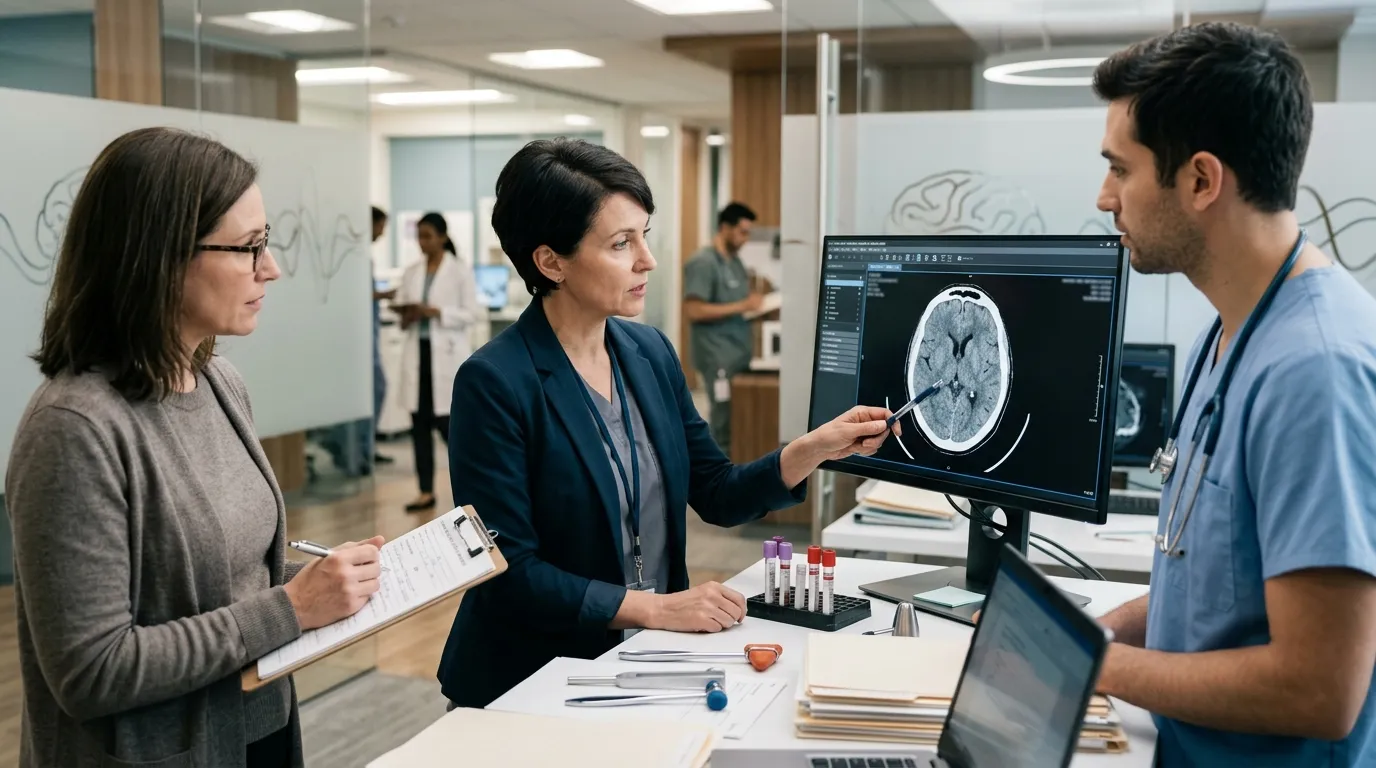
The “M” in CBI-M represents modifiers: factors that can influence clinical presentation, treatment decisions, and outcomes.
Modifiers may include characteristics such as age, preexisting medical conditions, medications, previous brain injuries, injury mechanism, and other circumstances relevant to the patient’s presentation or recovery.
This part of the framework matters because a brain injury does not happen in isolation from the person who experiences it. An older adult who falls while taking anticoagulant medication may face different concerns from a healthy young adult injured during sports, even when their initial level of consciousness appears similar.
Those differences are not side notes. They can affect how clinicians interpret findings and how researchers compare groups of patients.
For a detailed explanation of the initiative, readers can review the National Institute of Neurological Disorders and Stroke overview of the new TBI classification framework.
What the New Framework Could Mean for Patients and Research
The proposed framework is not a new at-home diagnostic system, and it does not mean every hospital has already replaced traditional TBI terminology. The researchers behind CBI-M have identified validation, clinical implementation, and testing beyond the acute phase as important next steps.
Still, the idea represents a meaningful shift from asking only how severe a TBI is to asking which clinical, biological, imaging, and personal features characterize it.
That change could eventually improve communication between clinicians, make research studies more comparable, and help scientists identify which types of patients benefit from particular treatments or follow-up strategies.
We cover developments in diagnosis, biomarkers, rehabilitation, and emerging TBI research in the Brain Injury Research & News section.
What This Means for Someone Diagnosed With “Mild TBI”
If you or a family member has been told that an injury is “mild,” the label should not be interpreted as a guarantee that symptoms will be minor or short-lived. It also should not be interpreted as a prediction that recovery will be difficult. It is one part of an early clinical description.
Symptoms and function still matter. Headache, dizziness, light or noise sensitivity, memory problems, concentration difficulty, sleep disturbance, emotional changes, and fatigue can affect daily life even when initial imaging is reassuring.
Recovery should therefore be guided by the actual symptoms and clinical findings of the individual, not by the emotional meaning people sometimes attach to the word “mild.”
More specific classification could also help reduce confusion. Instead of two patients being described only as having mild TBI, clinicians could document that their clinical findings are similar while their imaging, biomarkers, or risk modifiers differ.
That detail may become especially valuable as research moves toward more personalized approaches to brain injury care.
It may also help patients understand why their experience differs from someone else’s. Brain injury recovery is not a competition, and people with the same diagnostic label do not need to recover on the same timetable.
For longer-term guidance, our Living With Brain Injury section explores work, family life, cognitive changes, fatigue, and other practical issues that can continue beyond the initial medical evaluation. Families supporting an injured person can also find dedicated information in our Caregivers section.
CBI-M proposal
The CBI-M proposal reflects a broader change in brain injury science: clinicians and researchers are increasingly trying to describe TBI as a heterogeneous condition rather than one injury with three simple levels.
The familiar mild, moderate, and severe labels are unlikely to disappear immediately, and the new framework still requires validation and implementation work. But the direction is important. Combining clinical examination, biomarkers, imaging, and patient-specific modifiers may provide a more accurate picture of what a traumatic brain injury actually looks like.
For patients, the practical message is straightforward: a severity label is useful, but it is not the whole story. Your symptoms, scan findings, biological markers when used, medical history, and recovery over time all contribute to understanding the injury.
Medical note: This article is for educational purposes only and does not replace evaluation, diagnosis, or treatment by a qualified healthcare professional. Seek urgent medical attention after a head injury if serious or worsening symptoms develop.