
Athletes often want one answer after a concussion: “When can I play again?” The safest answer is not based on a calendar date alone. Returning to sports after concussion is a gradual medical process that depends on symptoms, normal daily activities, exercise tolerance, and how the athlete responds as physical demands increase.
The Centers for Disease Control and Prevention continues to recommend a six-step return-to-play progression based on international concussion-in-sport guidance. An athlete should return to sports practice only with approval and supervision from a healthcare provider, and each stage typically takes at least 24 hours. That means even an uncomplicated progression takes several days after the athlete is ready to begin it.
This approach matters because feeling better while sitting at home is not the same as tolerating running, rapid head movement, sport-specific drills, contact practice, and competition. Symptoms can return as intensity rises. The progression is designed to expose the recovering brain to increasing demands in a controlled way rather than jumping directly from rest to full competition.
For readers who need an introduction to concussion and traumatic brain injury, our Start Here guide to brain injury explains symptoms, evaluation, and the early recovery process.
Why Return to Play Should Be Gradual
A concussion is a mild traumatic brain injury that can affect thinking, balance, vision, sleep, mood, reaction time, and physical tolerance. An athlete may look normal while still experiencing headache, dizziness, concentration problems, fatigue, light sensitivity, or symptoms that appear only during exertion.
The first priority after a suspected sports concussion is not finishing the game. The athlete should be removed from play and evaluated appropriately. Returning on the same day can expose a recovering athlete to another impact before the injury has been properly assessed.
Recovery Starts Before the Return-to-Sport Progression
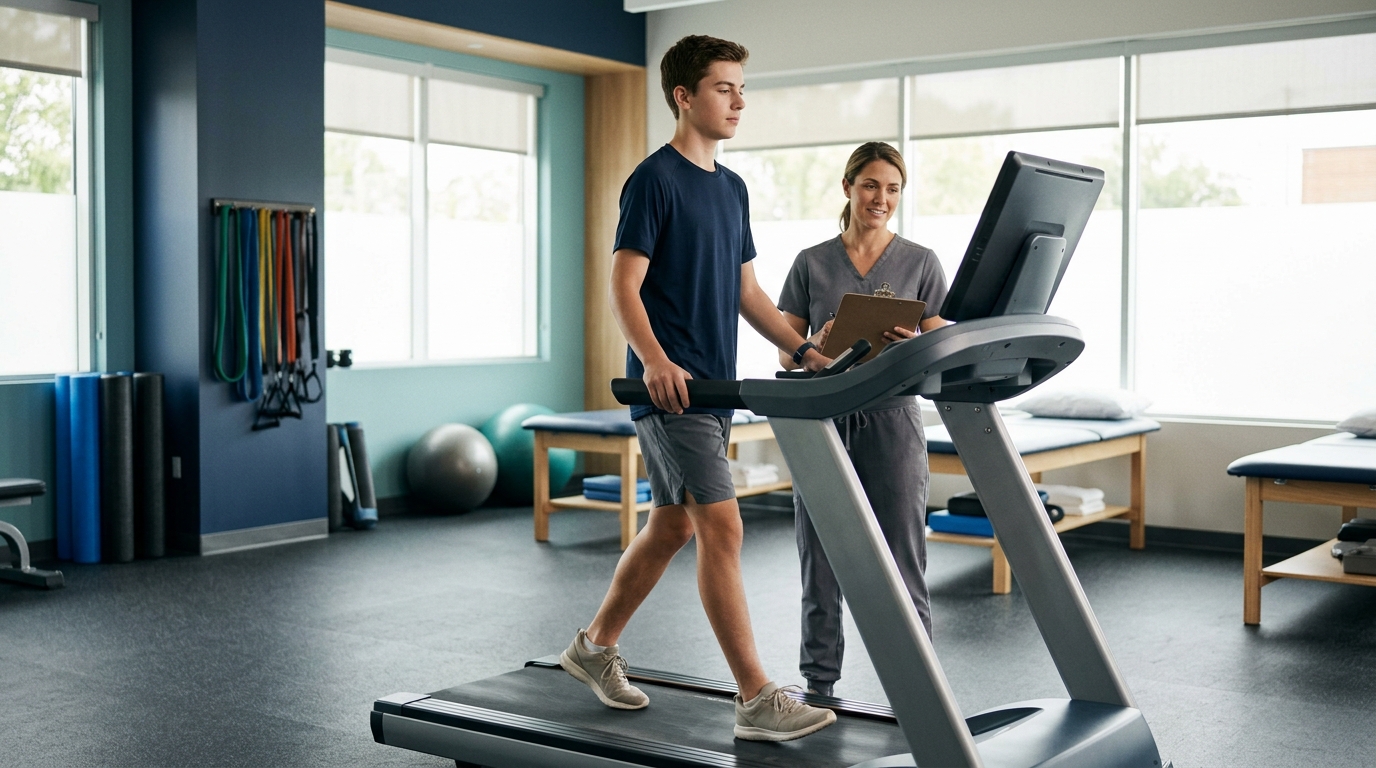
Modern concussion care does not generally mean spending days isolated in a dark room. CDC guidance for children supports relative rest early in recovery, followed by light physical activity such as walking as tolerated, while avoiding activities that create a risk of another head injury.
For students, returning to regular life also includes school. The CDC says most children can return to school within one or two days after concussion, often with temporary supports if symptoms interfere with learning. Return to school and return to sports can overlap, but an athlete should be back to regular non-sports activities without accommodations before completing the sports progression.
Step 1 begins with regular activities, not competition
The CDC’s first return-to-play step is being back to regular activities, such as school, with healthcare-provider approval to begin the sports progression. This creates an important checkpoint. If ordinary daily activities still cause substantial symptoms, full athletic competition is not the next logical test.
Light exercise comes before hard training
Step 2 adds light aerobic activity. CDC examples include five to ten minutes of walking, light jogging, or stationary cycling, without weight lifting at this stage. Step 3 increases the workload to moderate activity, which can include moderate jogging, brief running, more demanding stationary cycling, and reduced weightlifting.
The purpose is not to prove toughness. It is to see whether the athlete can tolerate a measured increase in heart rate, body movement, and head movement without developing new symptoms. An athlete who feels fine at rest but develops headache or dizziness during exercise needs that information before progressing to harder training.
The Final Steps Reintroduce Sport-Specific Risk
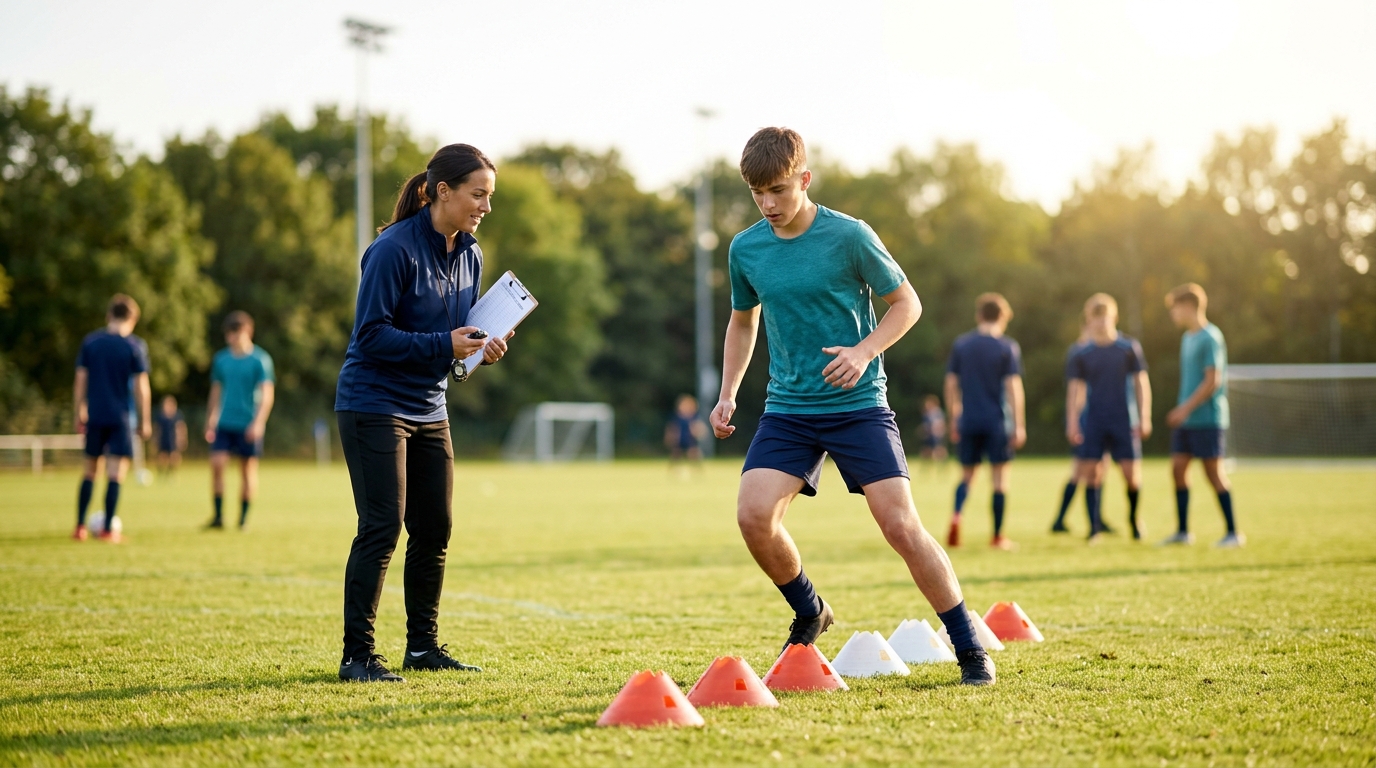
Step 4 moves to heavy, non-contact activity. The CDC includes sprinting or running, high-intensity cycling, a regular weightlifting routine, and non-contact sport-specific drills. This stage can look much more like normal training, but it still avoids contact that could produce another head impact.
Step 5 permits practice and full contact when full contact is appropriate for the sport. This happens in a controlled practice environment. Step 6 is the return to competition.
Every step is also a symptom check
CDC guidance says each step typically takes a minimum of 24 hours, and the athlete should advance only if no new symptoms occur at the current stage. Parents, coaches, athletic trainers, and athletes should monitor symptoms as the workload increases.
If symptoms return or new symptoms appear, the athlete may be pushing too hard. The activity should stop and the athlete’s healthcare provider should be contacted. After additional recovery and resolution of symptoms, the athlete may be directed to restart at the previous step that was completed without symptoms.
This is why return to play is a progression rather than a countdown. A six-step protocol is not the same as automatically returning six days after the injury. The athlete first has to reach the point where the healthcare provider approves starting the progression, and then the response to each stage determines what happens next.
What Athletes, Parents, and Coaches Should Know in 2026
Sports concussion remains an important youth-health issue. CDC data updated in January 2026 show that about seven out of ten emergency-department visits for sports- and recreation-related traumatic brain injuries and concussions involve children age 17 and younger. The CDC also identifies contact sports as a major source of these injuries among children.
A Safe Return Is Individual, Not a Race
Parents often compare recovery timelines between teammates, siblings, or previous concussions. That comparison can be misleading. One athlete may improve within days, while another needs several weeks or specialty treatment. Even repeated concussions in the same athlete may not follow identical recovery patterns.
The CDC notes that most children with concussion feel better within two to four weeks, but some experience symptoms that last longer. A history of previous concussion, greater initial symptom burden, sleep problems, learning difficulties, neurological or mental-health conditions, and social stressors can be associated with a more complicated recovery.
Research also continues to examine whether recovery patterns differ across groups. Our article on sex differences in concussion recovery discusses 2026 evidence suggesting that female patients may experience greater symptom burden and longer recovery in some domains, while emphasizing that sex cannot predict an individual athlete’s outcome.
Medical clearance should not be replaced by pressure to play
A championship game, scholarship opportunity, important tryout, or athlete’s desire to return does not change the biology of recovery. Coaches and parents should avoid encouraging athletes to hide headaches, dizziness, fogginess, visual problems, or other symptoms just to progress through the protocol.
Athletes should also understand that reporting symptoms is part of protecting their ability to keep participating in sport over the long term. Symptoms are useful information for the healthcare professional overseeing recovery.
The CDC HEADS UP six-step return-to-play guidance is a strong resource for athletes, parents, coaches, and teams because it clearly separates regular activity, light aerobic exercise, moderate activity, heavy non-contact training, full-contact practice, and competition.
For student athletes, school performance should remain part of the conversation. A player who can jog without headache but still cannot tolerate a full school day, read comfortably, or concentrate through normal classes may still need recovery support.
Families should seek follow-up when symptoms are worsening, not improving as expected, or continuing to interfere with daily life. Depending on the symptoms, care may include a concussion specialist, sports medicine physician, vestibular therapist, physical therapist, occupational therapist, headache specialist, vision professional, or other clinician.
Urgent evaluation is needed for concussion danger signs such as repeated vomiting, seizures, increasing confusion, unusual behavior, weakness or numbness, slurred speech, worsening headache, unequal pupils, inability to wake normally, or loss of consciousness.
Our Living With Brain Injury section covers practical issues when symptoms continue beyond the initial injury period. Parents and family members supporting a young athlete can also use our Caregivers resource center, while our Research & News section follows new developments in concussion science.
return-to-sport
The best return-to-sport plan is neither unnecessarily restrictive nor rushed. Current guidance supports a gradual return to normal activity and controlled exercise, followed by progressively more demanding sport-specific activity under medical supervision.
For athletes, that means the goal is not simply to pass a test and get back into the lineup. The goal is to return with confidence that the brain and body can handle the demands of practice and competition without symptoms returning.
For parents and coaches, the most useful role is to make honest symptom reporting easier, follow the progression consistently, and resist pressure to skip steps. Concussion recovery is individual, but the principle behind safe return to sport is straightforward: increase the challenge gradually, watch the athlete’s response, and let medical guidance—not the schedule—determine when competition resumes.
Medical note: This article is for educational purposes only and does not replace evaluation, diagnosis, or return-to-sport clearance from a qualified healthcare professional. A suspected concussion should be assessed appropriately, and an athlete with serious or worsening symptoms should receive urgent medical care.